 Chat with us
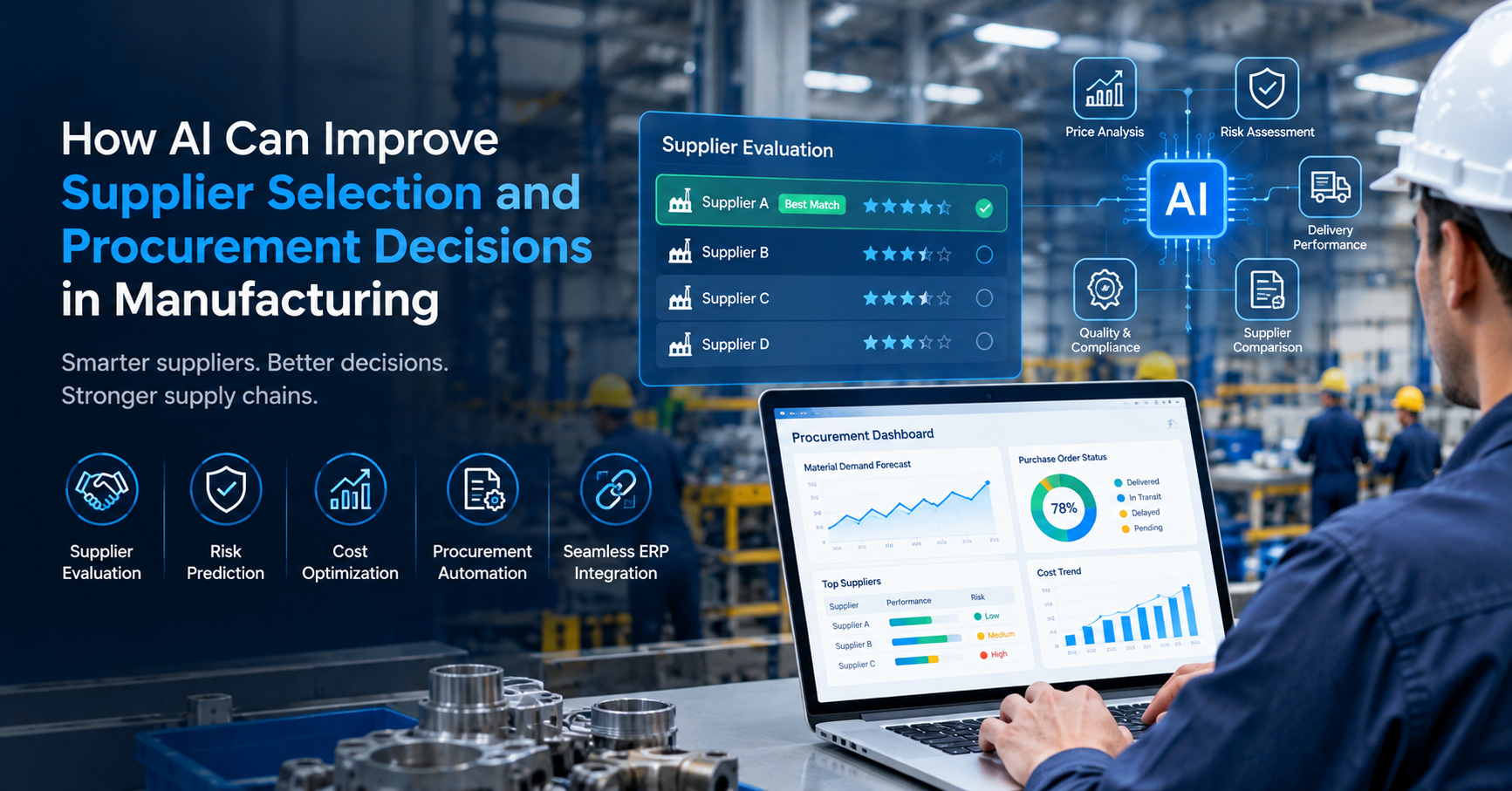
How AI Can Improve Supplier Selection and Procurement Decisions in Manufacturing
Manufacturers depend on reliable suppliers to maintain production schedules, control material costs, and deliver products on time. However, supplier selection and procurement decisions can become complicated when businesses manage multiple vendors, fluctuating raw material prices, inconsistent delivery timelines, and changing production requirements.
Traditional procurement processes often rely on spreadsheets, historical purchase orders, manual supplier evaluations, and individual experience. While these methods can work for smaller operations, they become increasingly difficult to manage as supplier networks and production demands grow.
Artificial intelligence (AI) can help manufacturers make smarter supplier selection and procurement decisions by analyzing supplier performance, forecasting material demand, identifying purchasing risks, and automating repetitive procurement tasks. When integrated with manufacturing ERP systems, AI can provide purchasing teams with better visibility into costs, supplier reliability, and potential supply chain disruptions.
For manufacturers seeking to improve procurement efficiency, custom AI solutions offer an opportunity to transform purchasing from a reactive administrative function into a more proactive, data-driven business process.
What Is AI in Manufacturing Procurement?
AI in manufacturing procurement refers to the use of machine learning, predictive analytics, natural language processing, and optimization algorithms to support purchasing and supplier management activities.
Traditional procurement systems record purchase orders, invoices, inventory movements, and supplier details. AI-enabled procurement solutions can analyze this information to identify patterns, predict potential problems, and recommend appropriate actions.
For example, an AI-powered procurement system can compare supplier delivery performance, historical prices, defect rates, payment terms, and current lead times to help purchasing managers evaluate potential vendors.
Rather than relying exclusively on price or manual assessments, manufacturers can use AI to consider multiple factors when selecting suppliers and planning purchases.
Custom AI development makes it possible to tailor these capabilities to a manufacturer's industry, procurement policies, existing ERP software, and specific operational requirements.
How AI Improves Supplier Selection in Manufacturing
Supplier Performance Analysis
Choosing the lowest-priced supplier does not always produce the lowest overall procurement cost. Delayed deliveries, inconsistent product quality, and unexpected order changes can create additional expenses and disrupt production.
AI can analyze historical supplier data, including delivery timelines, rejection rates, order accuracy, pricing changes, and responsiveness to purchasing requests.
Using this information, manufacturers can develop supplier performance scores and identify vendors that consistently meet operational requirements.
For example, a manufacturer sourcing electronic components from several suppliers could use AI to compare delivery reliability, quality consistency, and total purchasing costs. The system could highlight suppliers that offer a stronger balance of price and performance.
AI-generated scores should support procurement decisions rather than replace human judgment. Supplier certifications, contractual obligations, ethical sourcing requirements, and other qualitative factors may also influence the final decision.
Supplier Risk Prediction
Supplier disruptions can affect production schedules, inventory availability, and customer delivery commitments. Risks may arise from extended lead times, inconsistent delivery performance, financial instability, geopolitical events, or dependence on a single supplier.
AI-powered risk analysis can examine available procurement records, supplier delivery history, inventory levels, and approved external risk data to identify warning signs.
For example, if a supplier's average delivery time begins increasing over several orders, an AI system can flag the change and estimate which upcoming production orders could be affected.
Procurement teams can then investigate alternative suppliers, adjust purchase schedules, or increase safety stock for critical materials.
The accuracy of these predictions depends on the quality, timeliness, and coverage of the available data.
Intelligent Supplier Comparison
Comparing suppliers manually can be time-consuming when manufacturers purchase hundreds of components or maintain a large vendor network.
Custom AI solutions can consolidate supplier information and evaluate vendors against predefined procurement criteria.
These criteria may include:
- Unit price and total landed cost
- Delivery reliability and lead-time consistency
- Product quality and defect rates
- Minimum order quantities and production capacity
- Payment terms and contractual conditions
- Compliance with industry and sourcing requirements
AI can rank eligible suppliers according to business priorities and explain the factors influencing its recommendations. Procurement managers can adjust weightings based on whether cost reduction, quality, delivery reliability, or supply continuity is most important.
This creates a more consistent supplier evaluation process while preserving human oversight for important purchasing decisions.
How AI Optimizes Manufacturing Procurement Decisions
Accurate Material Demand Forecasting
Manufacturers need to purchase materials early enough to support production without holding excessive inventory.
AI-driven demand forecasting can analyze historical consumption, sales orders, production schedules, inventory records, and seasonal patterns to estimate future material requirements.
When connected to manufacturing ERP software, these forecasts can help procurement teams determine which materials are likely to be needed, when orders should be placed, and where shortages may occur.
For example, if an upcoming production schedule requires a higher volume of a specific component, the system can flag the projected requirement and compare it with current stock and supplier lead times.
This helps purchasing teams make informed procurement decisions before material shortages disrupt production.
Purchase Order Automation
Procurement teams frequently spend time creating purchase orders, checking approval requirements, verifying supplier information, and following up on pending deliveries.
AI can automate parts of these workflows by extracting information from purchase requisitions, invoices, supplier quotations, and other business documents.
A custom procurement application can validate extracted details against ERP records, identify discrepancies, route requests for approval, and generate draft purchase orders.
For example, when an approved production plan creates additional material requirements, an integrated system can prepare purchase requisitions based on inventory availability, purchasing rules, and approved supplier lists.
Sensitive actions, such as approving high-value orders or changing supplier banking information, should retain appropriate authorization controls.
Procurement Cost Analysis
Material prices can fluctuate because of market conditions, transportation expenses, currency movements, and changes in supplier pricing.
AI-powered analytics can compare historical purchase prices, supplier quotations, order quantities, and transportation costs to identify purchasing patterns and potential savings opportunities.
Manufacturers can use these insights to identify unusually expensive purchases, evaluate volume discounts, compare alternative sourcing options, and understand changes in total procurement expenditure.
For instance, a manufacturer may discover that a supplier offering a lower unit price consistently requires more urgent shipments or produces higher rejection rates. Evaluating the total cost of ownership can reveal whether that supplier actually provides better value.
AI can support these analyses, but cost-saving recommendations should be validated against current quotations, contractual terms, and operational requirements.
Inventory and Supplier Coordination
Procurement decisions directly affect inventory levels and production continuity. Ordering too much material increases storage costs and ties up working capital, while ordering too little creates shortages and production delays.
AI can combine demand forecasts, current inventory, open purchase orders, production schedules, and supplier lead times to recommend replenishment quantities and purchasing dates.
When integrated with an ERP system, these recommendations can help procurement and production teams work from consistent information.
This is particularly useful for manufacturers managing large bills of materials, multiple production lines, or suppliers with variable delivery schedules.
Integrating AI with Manufacturing ERP Systems
AI delivers greater operational value when procurement insights are connected to the systems manufacturers already use.
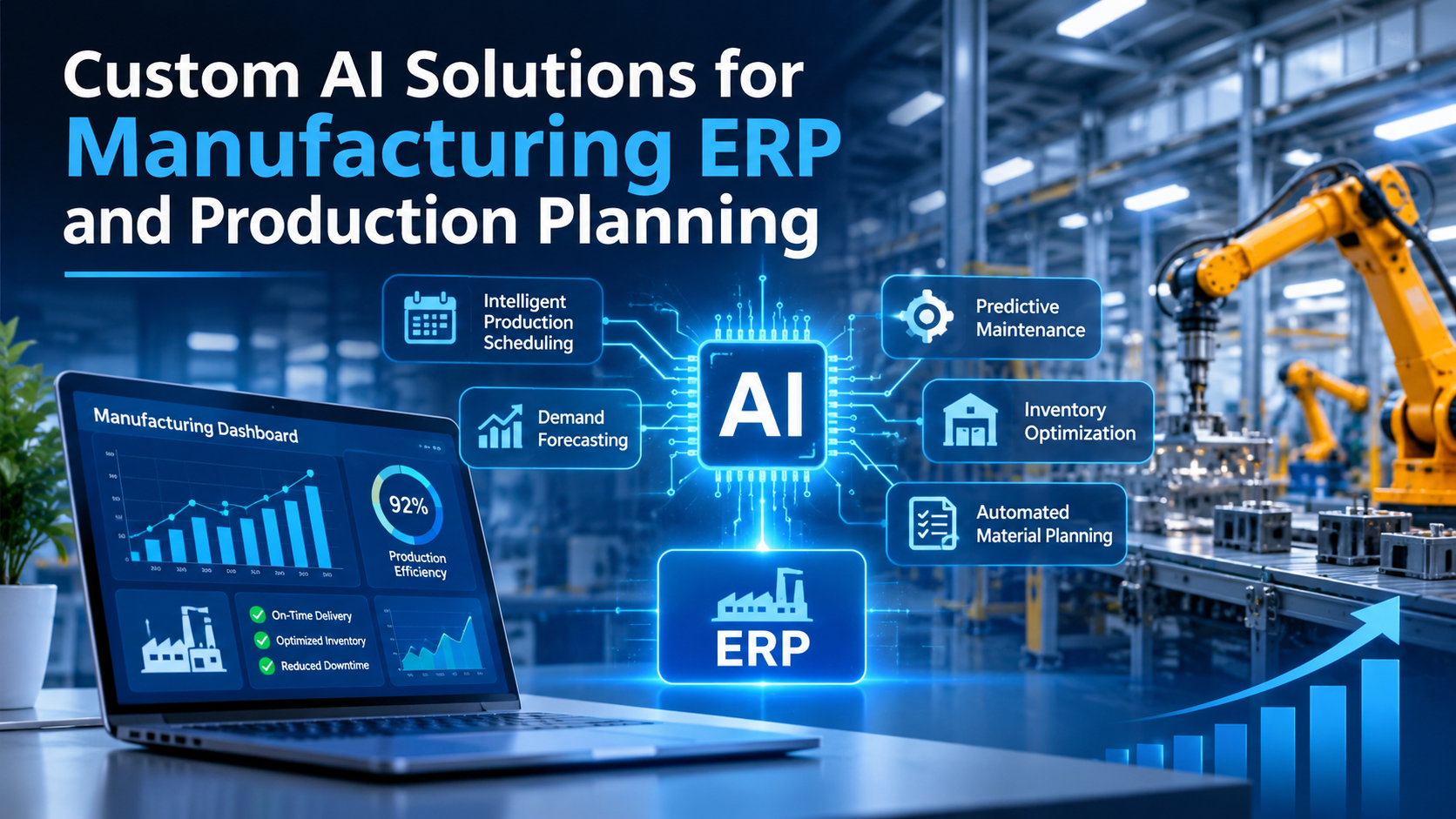
Manufacturing ERP platforms typically manage purchasing, inventory, production planning, finance, and supplier records. Custom AI applications can extend these systems with predictive analysis, supplier recommendations, and automated workflows.
A practical integration may include:
- Connecting ERP purchase orders, inventory records, and supplier master data.
- Consolidating delivery performance, quotation, and quality information.
- Applying AI models to supplier evaluation, demand forecasting, and risk identification.
- Displaying recommendations through procurement dashboards and alerts.
- Integrating approved recommendations with existing purchase and approval workflows.
Depending on the ERP platform, integration may use APIs, database connections, middleware, or scheduled data pipelines.
Manufacturers do not necessarily need to replace their existing ERP software to introduce AI. A focused application that works with current systems can be a more practical starting point, provided the architecture meets security, performance, and data governance requirements.
Key Benefits of AI-Powered Procurement for Manufacturers
AI adoption can help manufacturing businesses pursue several measurable improvements.
Better supplier decisions: Evaluate vendors using consistent performance, cost, quality, and reliability criteria.
Reduced supply chain risk: Identify potential delivery problems and supplier performance changes earlier.
Improved purchasing efficiency: Automate repetitive document processing, data validation, and routine procurement workflows.
Lower inventory carrying costs: Align purchasing decisions more closely with production demand and material availability.
Greater cost visibility: Analyze supplier pricing, purchasing patterns, and total procurement expenditure.
Stronger operational coordination: Connect procurement decisions with production planning, inventory management, and ERP workflows.
The actual results depend on implementation quality, data availability, business processes, and how effectively purchasing teams use AI recommendations.
Challenges of Implementing AI in Manufacturing Procurement
AI procurement initiatives can face challenges when supplier records are incomplete, purchasing information is inconsistent, or different departments maintain separate data sources.
Manufacturers should begin by reviewing data quality and establishing consistent definitions for supplier performance, delivery reliability, product quality, and procurement cost.
Integration complexity is another consideration. Existing ERP platforms, legacy applications, and supplier portals may use different data formats and business rules. These systems need to exchange information reliably before AI recommendations can be incorporated into daily operations.
Businesses should also consider data security, supplier confidentiality, access controls, and the explainability of AI-generated recommendations.
A practical implementation starts with a defined use case, such as supplier performance analysis or material shortage prediction. The solution can then be tested against historical procurement data and evaluated using measurable business indicators before broader deployment.
How to Measure the ROI of AI in Procurement
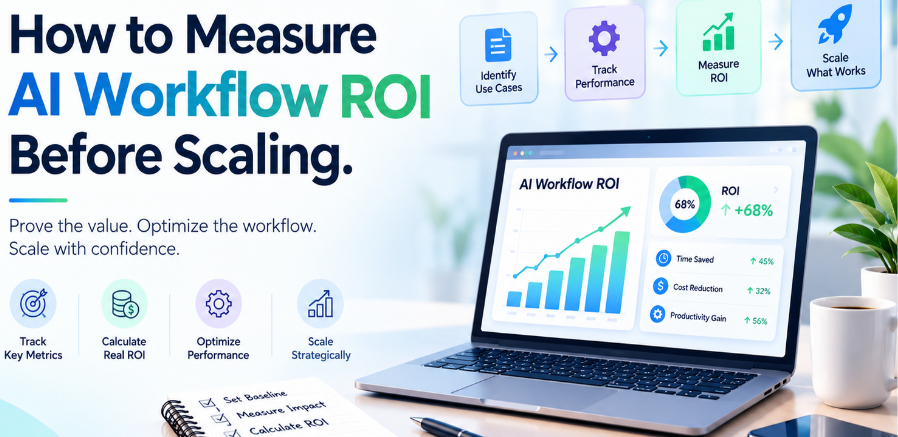
Manufacturers should establish a baseline before investing in AI-powered procurement software. This makes it easier to determine whether the implementation is delivering meaningful business value.
Useful performance indicators include:
- Supplier on-time delivery rate
- Material purchase price variance
- Supplier defect and rejection rate
- Procurement cycle time
- Emergency purchasing frequency
- Inventory carrying costs
- Production delays caused by material shortages
- Purchase order processing cost
For example, if a manufacturer wants to reduce emergency material purchases, it can compare their frequency and associated costs before and after implementing AI-based shortage prediction.
The evaluation should account for software development, integration, infrastructure, data preparation, training, and ongoing maintenance costs. A pilot project focused on one procurement challenge can help establish a realistic business case before expanding the solution.
How Custom AI Development Can Transform Procurement
Off-the-shelf procurement platforms can provide useful standard capabilities, but manufacturers may have specialized supplier evaluation rules, industry-specific compliance requirements, or complex integrations that require a tailored approach.
Custom AI development enables businesses to build procurement applications around their existing workflows and operational priorities.
Possible solutions include intelligent supplier scoring systems, AI-based procurement analytics dashboards, automated quotation comparison tools, supplier risk monitoring applications, and ERP-integrated material forecasting systems.
Askzenix Technologies provides AI development and custom software engineering services for businesses looking to automate workflows and build data-driven applications. Manufacturers exploring AI-powered procurement can assess opportunities to integrate supplier analytics, predictive insights, and intelligent automation with their existing business systems.
The right solution should address a measurable procurement challenge, fit the manufacturer's current technology environment, and provide a clear path for monitoring business outcomes.
Frequently Asked Questions
How is AI used in supplier selection?
AI analyzes supplier pricing, historical delivery performance, product quality, lead times, and other relevant factors to help manufacturers compare vendors. It can identify patterns, flag potential risks, and recommend suppliers based on predefined business priorities.
Can AI automate manufacturing procurement?
Yes. AI can assist with quotation analysis, purchase requisition processing, document extraction, supplier performance monitoring, and demand forecasting. Approval controls and human review should remain in place for high-value or high-risk purchasing decisions.
Can AI integrate with existing manufacturing ERP software?
Yes. AI applications can often integrate with existing ERP systems through APIs, middleware, or data pipelines. The feasibility and complexity depend on the ERP platform, available interfaces, data quality, and security requirements.
How does AI reduce procurement costs?
AI can help identify price variations, compare total supplier costs, improve demand forecasting, reduce avoidable emergency purchases, and optimize inventory replenishment. Savings depend on whether the recommendations lead to measurable operational improvements.
Is custom AI procurement software suitable for small and medium-sized manufacturers?
Yes. Small and medium-sized manufacturers can begin with a focused solution, such as supplier performance analysis or material demand forecasting. A phased approach helps limit initial investment and demonstrate value before expanding functionality.
Conclusion
AI is changing how manufacturers evaluate suppliers, manage purchasing costs, forecast material requirements, and respond to supply chain risks. By combining procurement data with predictive analytics and intelligent automation, businesses can make more informed decisions and improve coordination between purchasing, inventory, and production teams.
The most effective approach is to identify a specific procurement challenge, connect reliable business data, and introduce AI capabilities that support existing workflows. Manufacturers can then measure results and expand successful applications across their procurement operations.