 Chat with us
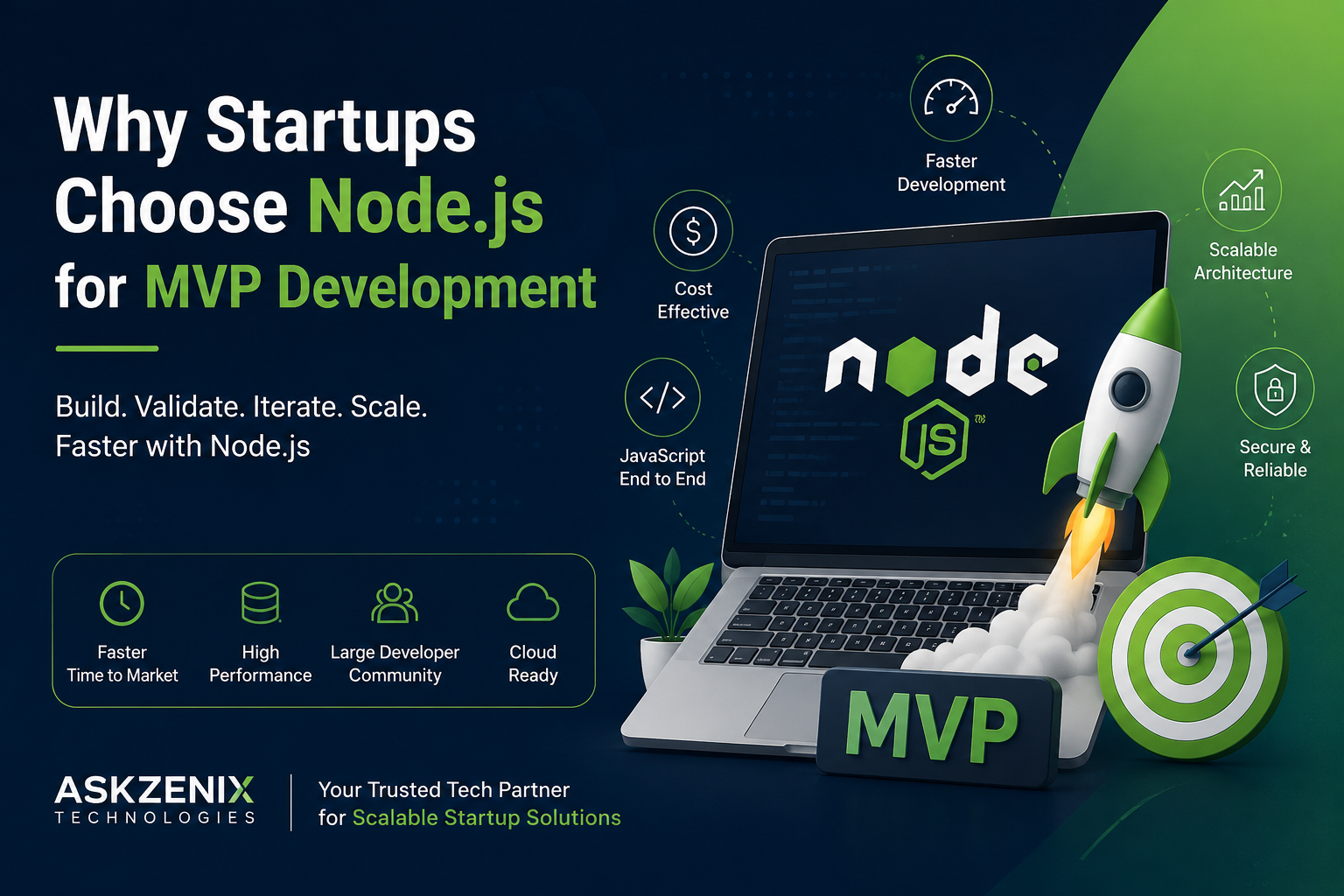
Why Startups Choose Node.js for MVP Development
Node.js for MVP development has become the preferred choice for startups looking to launch products quickly, validate business ideas, and scale efficiently. In today's competitive startup ecosystem, speed to market is critical. Building a Minimum Viable Product (MVP) allows founders to test their concept with real users, gather feedback, and refine the product before making significant investments.
Choosing the right technology stack plays a major role in the success of an MVP. Node.js stands out because it enables rapid development, high performance, and seamless scalability while keeping development costs under control. Whether you're building a SaaS platform, marketplace, fintech application, healthcare solution, or AI-powered product, Node.js provides a solid foundation for launching innovative digital products.
What Is MVP Development?
A Minimum Viable Product (MVP) is the first functional version of a product that includes only the core features needed to solve a specific problem. Instead of spending months or years building a complete solution, startups launch an MVP to validate assumptions, attract early adopters, and secure investor confidence.
The primary objectives of an MVP include:
- Testing product-market fit
- Collecting user feedback
- Reducing development risks
- Accelerating time-to-market
- Minimizing initial investment
- Building a roadmap based on real user data
This lean approach helps startups make informed decisions while avoiding unnecessary development costs.
Why Node.js Is Ideal for MVP Development
Rapid Development with JavaScript
One of the biggest advantages of Node.js is that developers can use JavaScript for both frontend and backend development. This unified technology stack simplifies development workflows, improves collaboration, and reduces the learning curve for engineering teams.
For startups, this translates into:
- Faster development cycles
- Reduced coding effort
- Easier maintenance
- Improved team productivity
- Quicker feature releases
A shorter development timeline enables startups to launch their products ahead of competitors.
Cost-Effective Development
Budget constraints are common for early-stage startups. Node.js helps optimize development costs by allowing businesses to use a single programming language across the application stack.
Additional cost-saving benefits include:
- Faster project completion
- Lower infrastructure requirements
- Reduced maintenance expenses
- Large open-source ecosystem
- Availability of experienced Node.js developers
These advantages make Node.js an economical choice for building scalable MVPs.
Excellent Performance
Node.js uses Google's V8 JavaScript engine, which compiles JavaScript into optimized machine code for faster execution.
Combined with its event-driven and non-blocking I/O architecture, Node.js efficiently handles multiple requests simultaneously without slowing down the application.
Benefits include:
- Faster page loading
- Better application responsiveness
- Reduced server resource usage
- Improved user experience
Performance is especially important when startups are trying to retain early users and demonstrate product value.
Easy Scalability
Many successful startups experience rapid user growth after launch. An MVP built on Node.js can scale efficiently without requiring a complete architectural redesign.
Node.js supports:
- Horizontal scaling
- Load balancing
- Micro services architecture
- Cloud-native deployment
- Distributed systems
This flexibility allows startups to grow their infrastructure as user demand increases.
Perfect for Real-Time Applications
Modern startups frequently develop applications that require instant communication between users and servers.
Examples include:
- Chat applications
- Food delivery platforms
- Ride-sharing apps
- Project management tools
- Live collaboration software
- Video conferencing platforms
- Online gaming
- Stock trading applications
Node.js handles real-time communication efficiently using Web Sockets and asynchronous processing, making it ideal for these use cases.
Large Open-Source Ecosystem
Node.js has one of the largest open-source ecosystems through npm (Node Package Manager). Developers can leverage thousands of pre-built packages and libraries to speed up development without compromising quality.
This enables startups to:
- Integrate payment gateways
- Add authentication systems
- Connect third-party APIs
- Implement notifications
- Manage file uploads
- Build analytics features
Using trusted libraries reduces development time while improving reliability.
Cloud-Ready Architecture
Most startups deploy applications on cloud platforms to improve scalability and reduce infrastructure costs.
Node.js integrates seamlessly with:
- Amazon Web Services (AWS)
- Microsoft Azure
- Google Cloud Platform (GCP)
- Docker
- Kubernetes
Cloud-native deployment allows startups to scale resources based on demand while optimizing operational expenses.
Faster Product Validation
Launching an MVP quickly allows startups to validate ideas before investing heavily in additional features.
With Node.js, businesses can:
- Release products faster
- Gather customer feedback early
- Improve features based on usage data
- Reduce product development risks
- Iterate continuously
This agile approach increases the likelihood of building products that meet market needs.
Supports Modern Startup Technologies
Today's startups often integrate advanced technologies into their products.
Node.js works effectively with:
- Artificial Intelligence APIs
- Machine Learning services
- Payment gateways
- IoT platforms
- CRM software
- Analytics tools
- Cloud databases
Its flexibility allows startups to evolve their products without changing the core backend architecture.
Security Considerations
Security is essential, even during the MVP stage. Professional Node.js development teams follow secure coding practices to protect applications and user data.
Best practices include:
- JWT authentication
- OAuth integration
- HTTPS implementation
- Data encryption
- Input validation
- API security
- Role-based access control
- Regular dependency updates
Building security into the MVP from the beginning helps reduce future risks and compliance challenges.
Industries Building MVPs with Node.js
Node.js is widely used across industries because of its flexibility and performance.
Popular sectors include:
- SaaS
- FinTech
- Healthcare
- EdTech
- E-commerce
- Logistics
- Real Estate
- Travel
- Media
- Artificial Intelligence
These industries benefit from Node.js's ability to support high-performance applications and rapid feature development.
Why Partner with a Node.js Development Company?
While Node.js simplifies development, building a successful MVP requires technical expertise, product strategy, and scalable architecture.
An experienced Node.js development company can help startups:
- Define MVP features
- Design scalable architecture
- Develop secure backend systems
- Integrate third-party services
- Deploy cloud-ready applications
- Optimize performance
- Provide ongoing support and enhancements
Working with experienced professionals reduces technical risks and accelerates product delivery.
Best Practices for Node.js MVP Development
To maximize the success of an MVP, startups should follow these best practices:
- Focus on solving one core problem
- Prioritize essential features over complexity
- Build modular and scalable architecture
- Use agile development methodologies
- Implement automated testing
- Monitor application performance
- Collect user feedback continuously
- Plan for future scalability from day one
These practices help create a stable MVP that can evolve into a full-featured product.
Frequently Asked Questions
Why is Node.js good for MVP development?
Node.js enables rapid development, high performance, cost efficiency, and easy scalability, making it an ideal technology for startups building MVPs.
How long does it take to build an MVP with Node.js?
The timeline depends on project complexity, but many MVPs can be developed within 8 to 16 weeks using agile development practices.
Can Node.js scale after the MVP stage?
Yes. Node.js is designed to support growing applications and can scale efficiently as user traffic and business requirements increase.
Is Node.js suitable for SaaS products?
Absolutely. Many SaaS platforms use Node.js because of its scalability, API capabilities, and support for cloud-native architectures.
Should startups hire a Node.js development company?
Partnering with an experienced development company helps startups build secure, scalable, and high-performing MVPs while reducing development risks and accelerating time-to-market.
Why Choose Askzenix Technologies for Node.js MVP Development?
At Askzenix Technologies, we help startups transform innovative ideas into market-ready digital products. Our team specializes in Node.js development services, custom software development, cloud-native applications, API integration, and scalable backend solutions. By following agile methodologies and modern engineering practices, we deliver MVPs that are secure, high-performing, and ready to scale as your business grows.
Conclusion
Choosing Node.js for MVP development gives startups a competitive advantage by enabling faster product launches, lower development costs, and seamless scalability. Its event-driven architecture, powerful JavaScript ecosystem, and cloud compatibility make it an excellent choice for building modern web applications that can grow with your business.
Whether you're launching a SaaS platform, marketplace, AI application, or enterprise solution, investing in professional Node.js development services ensures your MVP is built with the performance, flexibility, and scalability needed for long-term success. By partnering with an experienced development team like Askzenix Technologies, startups can accelerate innovation, validate ideas quickly, and build a strong foundation for future growth.