 Chat with us

Is AI Worth It for Small Businesses? A Practical Cost vs ROI Analysis
Artificial Intelligence (AI) is no longer a futuristic technology reserved for global enterprises. Today, AI for small businesses has become more accessible, affordable, and practical than ever before. From automating customer support to improving marketing performance and streamlining daily operations, AI is helping businesses achieve more with limited resources.
So, is AI worth it for small businesses?
The short answer is yes—but only when implemented with a clear business objective.
Businesses that invest in AI to solve specific operational challenges often experience higher productivity, lower operating costs, faster customer response times, and better decision-making. On the other hand, companies adopting AI simply because it is trending often struggle to see measurable returns.
This guide explores the real costs, benefits, ROI, common misconceptions, and practical use cases to help business owners determine whether AI is the right investment.
Why Every Small Business Is Considering AI in 2026?
Small businesses are operating in an increasingly competitive environment. Customers expect instant responses, personalized experiences, and seamless digital interactions. At the same time, businesses must manage rising labor costs, increasing workloads, and tighter profit margins.
AI addresses these challenges by automating repetitive tasks, enhancing customer engagement, and providing actionable insights from business data.
Several factors have accelerated AI adoption among small businesses:
- Affordable cloud-based AI platforms
- Easy integration with existing business software
- Growing availability of AI-powered productivity tools
- Increased demand for automation
- Rapid advancements in generative AI
Unlike a few years ago, businesses no longer need to build AI systems from scratch. Many solutions are available as subscription-based services, making AI adoption feasible even for startups and small teams.
The Biggest Myth About AI for Small Businesses
One of the biggest misconceptions is that AI is only suitable for large corporations with substantial budgets.
In reality, many AI tools are designed specifically for small and medium-sized businesses. They require minimal technical expertise and can be implemented without hiring an in-house AI team.
Another common myth is that AI replaces employees. The reality is quite different.
AI excels at handling repetitive and time-consuming tasks, while employees continue to focus on strategic planning, relationship building, creative thinking, and complex decision-making.
Successful businesses use AI to enhance human productivity—not replace it.
What Problems Can AI Actually Solve?
The true value of AI lies in solving real business problems rather than simply introducing new technology. Below are some of the most common operational challenges AI helps address.
Spending Too Much Time on Repetitive Tasks
Many small businesses lose valuable hours every week performing manual administrative work. Activities such as entering customer information, organizing documents, scheduling appointments, creating reports, and responding to routine emails consume significant employee time.
AI-powered automation can handle these repetitive processes with speed and accuracy. Instead of spending hours on administrative tasks, employees can focus on activities that directly contribute to business growth, customer relationships, and innovation.
For example, AI can automatically categorize incoming emails, generate meeting summaries, process invoices, organize files, and update customer records without manual intervention.
Losing Leads Outside Business Hours
Customers expect businesses to respond immediately, regardless of the time of day. Unfortunately, many small businesses lose valuable sales opportunities simply because no one is available to answer inquiries after business hours.
AI-powered chatbots and virtual assistants provide instant responses around the clock. They can answer frequently asked questions, collect customer information, qualify leads, schedule appointments, and even recommend products or services based on customer preferences.
Instead of waiting until the next business day, potential customers receive immediate assistance, increasing the likelihood of conversion.
Marketing Isn't Producing Enough Qualified Leads
Generating consistent leads remains one of the biggest challenges for small businesses. AI helps improve marketing efficiency by analyzing customer behavior, identifying audience segments, and optimizing campaigns based on performance data.
Businesses use AI to:
- Generate SEO-optimized content
- Personalize email campaigns
- Improve Google Ads targeting
- Optimize social media posting schedules
- Predict customer purchasing behavior
- Create product descriptions
- Analyze website traffic
Rather than replacing marketing teams, AI provides insights that enable more effective decision-making and better campaign performance.
Customer Support Is Consuming Too Much Time
Handling repetitive customer questions can overwhelm small support teams. AI-powered customer service solutions can answer common inquiries instantly, reducing response times while improving customer satisfaction.
Common support tasks AI can automate include:
- Order tracking
- Appointment scheduling
- Product recommendations
- Refund requests
- FAQ responses
- Ticket routing
This enables support representatives to focus on complex customer issues requiring human expertise.
How Much Does AI Cost for Small Businesses?
One of the most frequently asked questions is whether AI is affordable.
The answer depends on the scope of implementation.
Simple AI solutions such as chatbots, content generation tools, and meeting assistants are available through monthly subscriptions that fit most small business budgets.
More advanced implementations—such as custom workflow automation, predictive analytics, CRM integration, or AI-powered business applications—require a larger investment but typically deliver greater long-term value.
When Does AI Deliver the Best ROI?
AI provides the highest return on investment when it addresses repetitive, measurable business challenges.
For example, consider a small service-based business receiving 150 customer inquiries each day.
Without AI, employees manually answer the same questions repeatedly, resulting in slower response times and reduced productivity.
With AI, the majority of routine inquiries are handled automatically. Employees spend more time assisting high-value customers and closing sales instead of answering repetitive questions.
Similarly, businesses using AI-powered marketing automation often experience improved lead quality because campaigns become more personalized and data-driven.
The most common areas where businesses report positive ROI include:
- Reduced administrative workload
- Faster customer response times
- Higher employee productivity
- Increased lead conversions
- Improved customer retention
- Better operational efficiency
Real Examples of AI in Small Businesses
Retail
Retail businesses use AI to forecast demand, recommend products, optimize inventory levels, and personalize shopping experiences.
Healthcare
Medical clinics automate appointment scheduling, patient communication, document processing, and administrative workflows using AI.
Real Estate
Real estate agencies use AI to qualify leads, recommend suitable properties, automate follow-ups, and analyze market trends.
Manufacturing
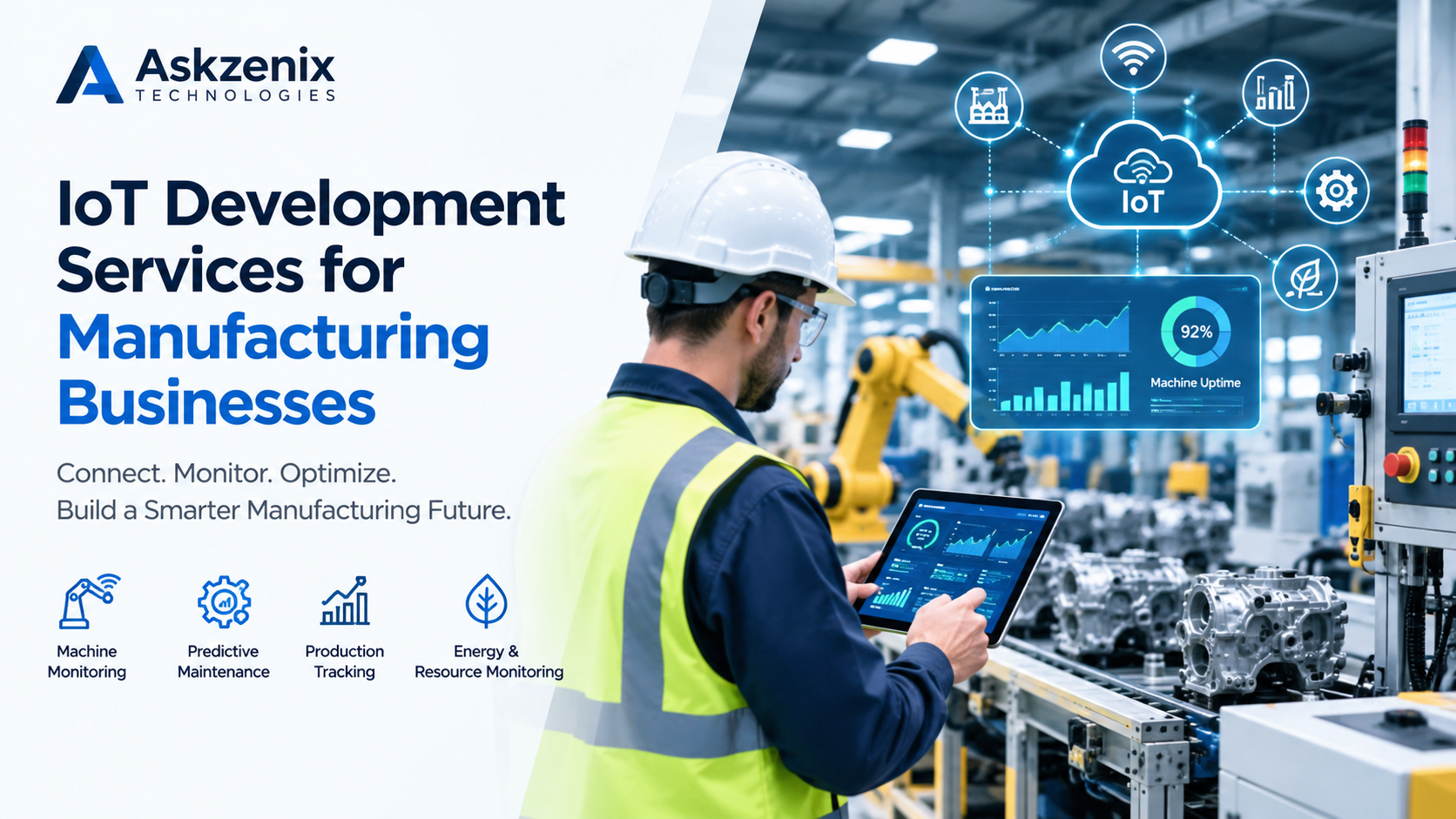
Manufacturers implement AI to monitor equipment, predict maintenance requirements, improve production quality, and reduce operational downtime.
Professional Services
Consulting firms, accounting practices, and legal professionals use AI for document preparation, research assistance, scheduling, proposal writing, and knowledge management.
Signs Your Business Is Ready for AI
If your business experiences any of the following challenges, AI can likely provide measurable value.
- Employees spend hours on repetitive administrative work.
- Customer inquiries are increasing faster than your support capacity.
- Marketing campaigns require significant manual effort.
- Sales teams struggle to prioritize qualified leads.
- Reports and analytics are generated manually.
- Business growth is limited by operational inefficiencies.
- Customers expect faster service than your current processes can deliver.
These indicators suggest that automation could improve both productivity and customer experience.
When AI May Not Be the Right Investment
Although AI offers significant advantages, it is not the right solution for every business.
AI may not deliver meaningful results if:
- Business processes are poorly documented.
- Data is inaccurate or inconsistent.
- There is no clear objective for implementation.
- The organization expects AI to solve every operational problem without process improvements.
- Leadership is unwilling to invest in employee training or change management.
Businesses should first optimize their workflows before introducing automation.
How to Adopt AI Without Overspending?
Rather than implementing AI across the entire organization, start with one high-impact business function.
Phase 1: Automate Customer Support
Deploy an AI chatbot to answer frequently asked questions and capture leads.
Phase 2: Improve Marketing
Use AI to generate content, optimize SEO, personalize email campaigns, and improve paid advertising performance.
Phase 3: Streamline Internal Operations
Automate document processing, scheduling, reporting, and administrative workflows.
Phase 4: Scale with Advanced AI
As your business grows, integrate predictive analytics, CRM intelligence, sales forecasting, and custom AI applications.
This phased approach minimizes risk while allowing businesses to measure ROI at every stage.
Frequently Asked Questions
Is AI expensive for small businesses?
Not necessarily. Many AI tools operate on affordable subscription models, making them accessible to startups and small businesses. More advanced custom AI solutions require higher investment but can deliver greater long-term returns.
Can AI replace employees?
No. AI is most effective at automating repetitive tasks, while employees continue to handle strategic thinking, creativity, relationship management, and complex decision-making.
Which industries benefit the most from AI?
Retail, healthcare, manufacturing, real estate, education, logistics, finance, and professional services are among the industries seeing significant value from AI adoption.
How long does AI implementation take?
Simple AI tools can often be deployed within days, while custom AI solutions may take several weeks or months depending on complexity and integration requirements.
What should businesses automate first?
Start with repetitive, time-consuming processes such as customer support, appointment scheduling, document management, email automation, and lead qualification. These areas typically deliver the fastest and most measurable ROI.
Final Verdict: Is AI Worth It for Small Businesses?
AI is no longer a luxury reserved for large enterprises. It has become a practical business tool that helps small businesses improve efficiency, reduce operational costs, and deliver better customer experiences.
However, the success of AI depends on how it is implemented. Businesses that identify a clear operational challenge, choose the right AI solution, and measure performance against defined goals are far more likely to achieve a strong return on investment.
Instead of asking whether AI is worth it, small businesses should ask which business problem AI can solve first. Starting with a focused use case, tracking measurable outcomes, and expanding gradually allows organizations to unlock the full potential of AI while minimizing risk